
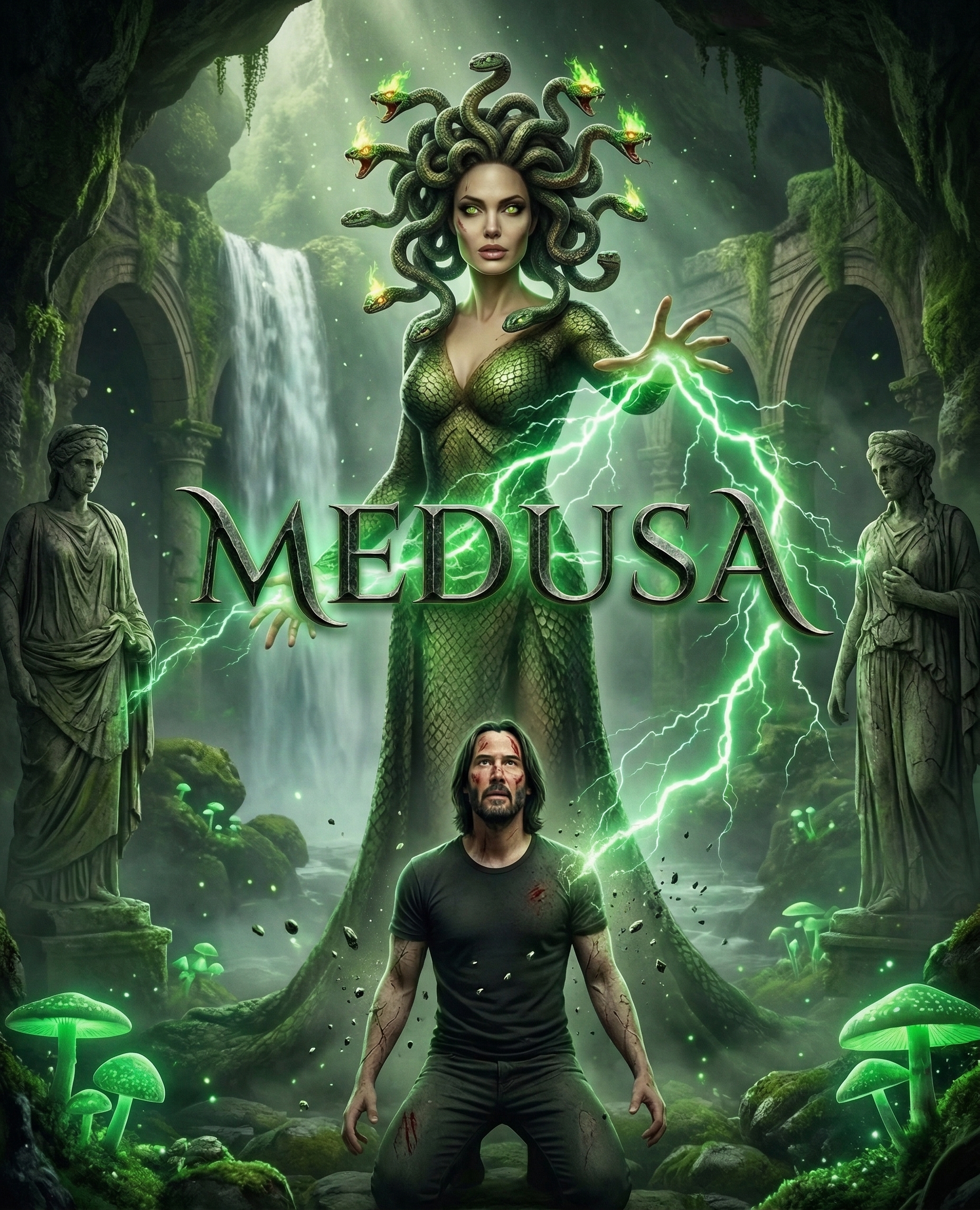
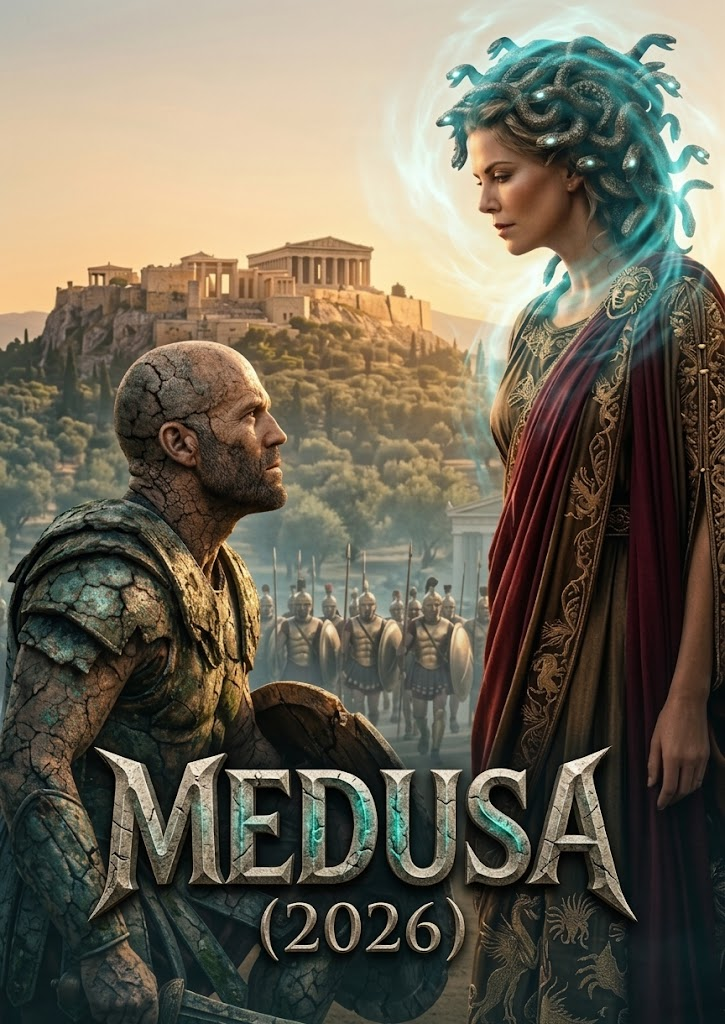
🐍 Medusa (2026): A Myth Reborn Through the Eyes of the Monster
A new mythological film titled Medusa (2026) is reimagining one of the most feared figures in Greek legend, offering a darker and more emotional interpretation of the infamous Gorgon.
Inspired by the ancient myth of Medusa, the film explores the story behind the curse that transformed a woman into a symbol of terror.
For centuries, Medusa has been remembered as the snake-haired monster whose gaze turned mortals into stone—a creature ultimately slain by the hero Perseus. However, the upcoming film seeks to challenge that familiar narrative by shifting the perspective to Medusa herself.
According to early story details, Medusa (2026) portrays her not as a mindless guardian of a cursed temple, but as a woman betrayed by the very gods she once served. After a devastating transformation that leaves her feared and hunted, she is forced into exile in a world where heroes chase glory and rulers fear the prophecies surrounding her power.
As the story unfolds, Medusa journeys across a brutal mythological landscape, struggling to survive while uncovering the truth behind the divine punishment that changed her forever. Her curse, once believed to be a mark of shame, may in fact hold a deeper meaning—one that could challenge the balance between humanity and the gods themselves.

The film promises sweeping mythological imagery, including ancient temples, hostile kingdoms, and encounters with legendary creatures rooted in Greek mythology. At its core, however, the story focuses on identity, betrayal, and the thin line between hero and monster.
By retelling the legend from Medusa’s perspective, the film raises a powerful question that echoes throughout the narrative: what if the creature feared in the myth was never truly the villain?
In Medusa (2026), the monster of the legend may finally become the hero of her own story.