
Whether you’re hiking through the wilderness, gardening in your backyard, or just exploring nature, encountering a snake is always a possibility. The key to staying safe isn’t fear — it’s knowledge. Learning how to distinguish between venomous and non-venomous snakes can help you avoid panic and prevent dangerous situations.
Here are eight essential tips to help you recognize potentially venomous snakes and stay safe outdoors:
1️⃣ Observe the Head Shape
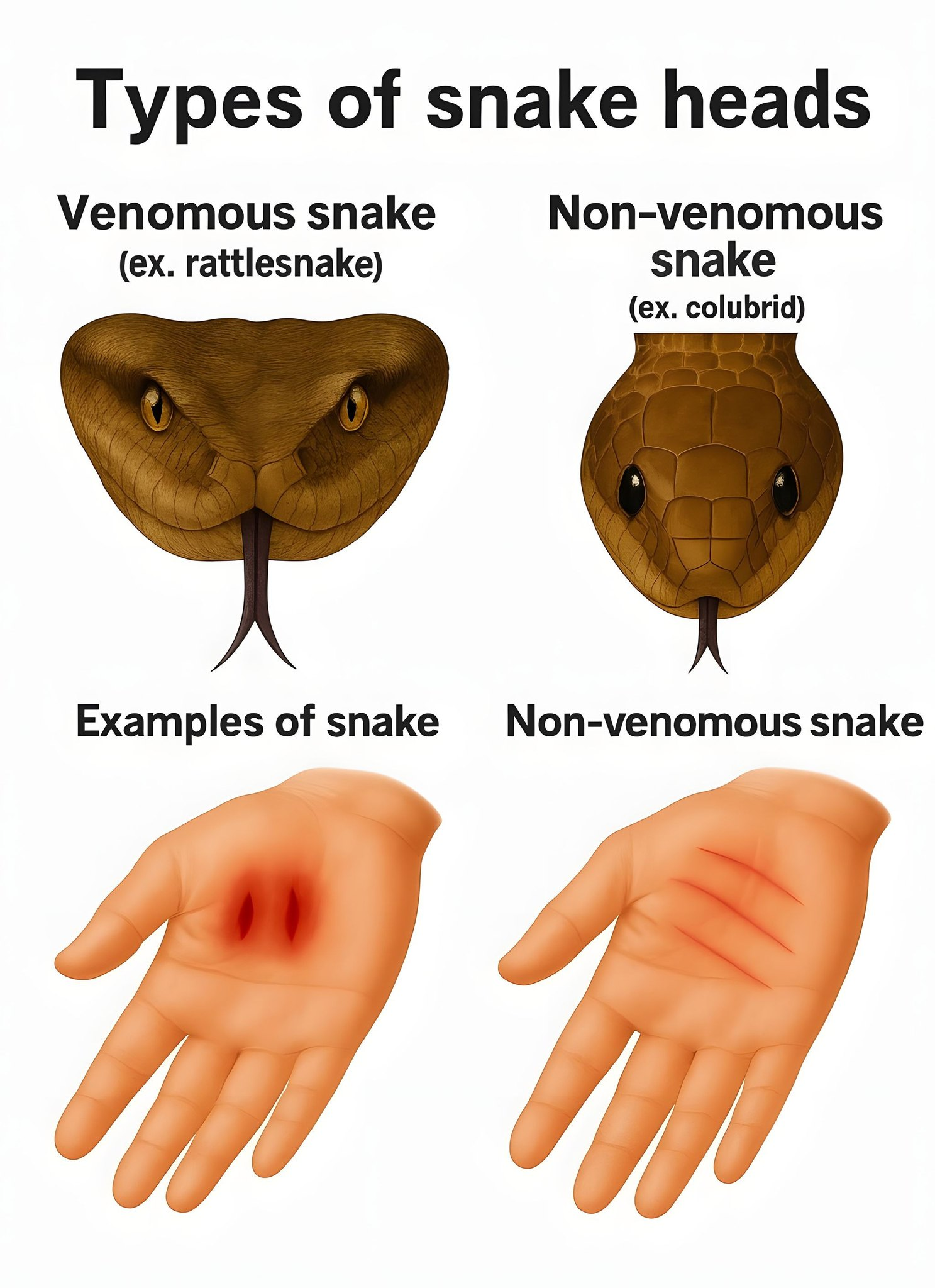
Most venomous snakes have a broad, triangular or arrow-shaped head due to the presence of venom glands located behind their eyes. In contrast, non-venomous snakes tend to have narrower, oval-shaped heads.
⚠️ Caution: Some harmless snakes can flatten their heads to mimic this shape, so don’t rely on this clue alone.
2️⃣ Be Aware of Imitation Behavior
Nature is full of copycats. Some non-venomous snakes mimic venomous ones by flattening their heads or adopting threatening postures. This behavior is designed to scare off predators — including humans.
✅ Use multiple signs, not just one, to identify danger.
3️⃣ Check the Eyes (From a Safe Distance!)
Venomous snakes often have vertical, slit-shaped pupils like a cat’s, while non-venomous species typically have round pupils.
🔍 Only try to observe this feature if you’re a safe distance away — never approach a snake just to look into its eyes.
4️⃣ Examine Bite Marks (If Bitten)
A venomous bite usually leaves one or two deep puncture wounds, while a non-venomous bite may show multiple shallow marks in a U-shape.
🚨 No matter the bite’s appearance, always seek immediate medical attention.
5️⃣ Recognize Symptoms of Venomous Bites
Watch for signs like:
- Rapidly spreading pain and swelling
- Bruising or skin discoloration
- Tingling, nausea, or trouble breathing
These may indicate venom has been injected — don’t wait, get help immediately.
6️⃣ Avoid Close Contact
Never try to handle, kill, or move a snake — even if it seems dead or harmless.
🚫 Most snakebites occur because someone got too close. Distance is your best defense.
7️⃣ Take Note of the Snake’s AppearanceIf bitten, try to remember key details:
- Color
- Pattern
- Size and length
This can help doctors identify the species and select the right antivenom.
8️⃣ Know Your Local Wildlife
Every region has its own set of snakes. The best way to protect yourself is to learn which venomous snakes live near you.
📚 If you hike, camp, or work outdoors often, spend time getting familiar with the local reptiles.
✅ Final Thoughts
Recognizing a venomous snake is a valuable skill — but your safety depends more on awareness and caution than expert knowledge. When in doubt, keep your distance and never interact with wild snakes. With the right precautions, you can enjoy the great outdoors without fear.