
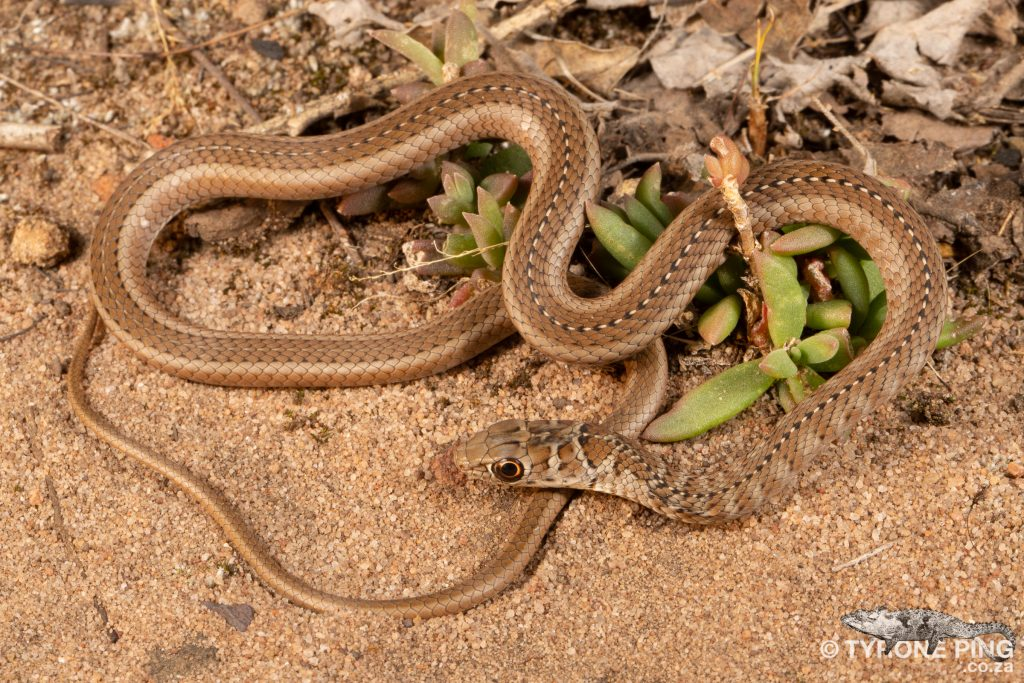
The Short-snouted Grass Snake (Psammophis brevirostris), a sleek and swift reptile native to southern Africa, continues to thrive across vast regions of the continent, from Gauteng and Limpopo to the Eastern Cape and beyond.
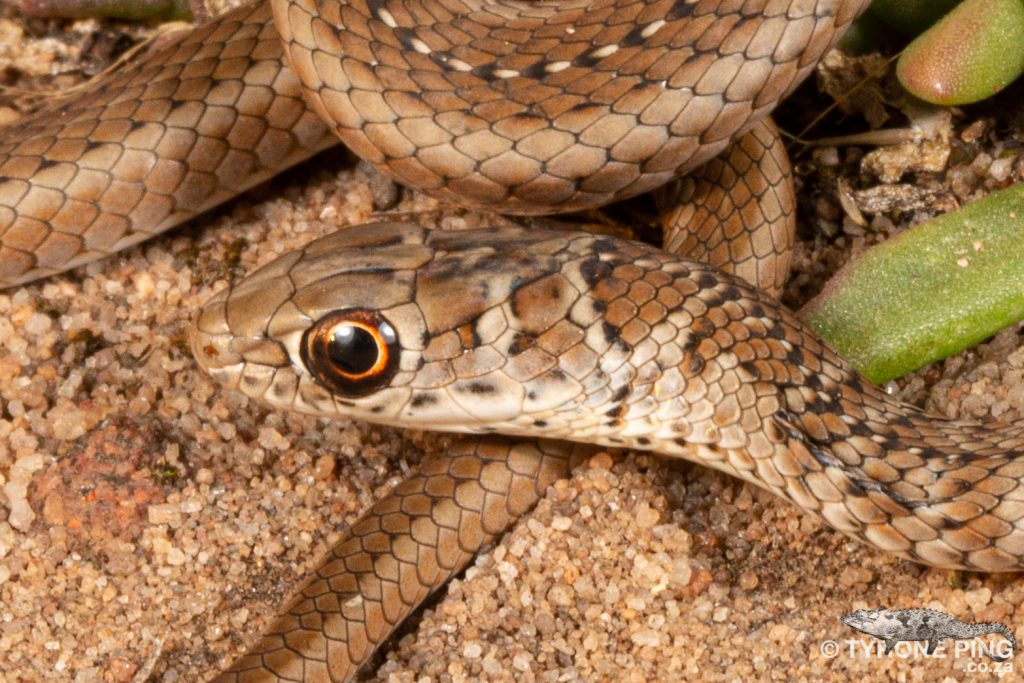
This medium-sized, mildly venomous snake is diurnal—active during the day—and is known for its lightning-fast movements and basking behavior. Averaging 40 to 60 centimeters in length, some individuals have been recorded exceeding one meter. Despite its relatively modest size, the Short-snouted Grass Snake is a fierce little predator, feeding on lizards, other snakes, and small rodents.
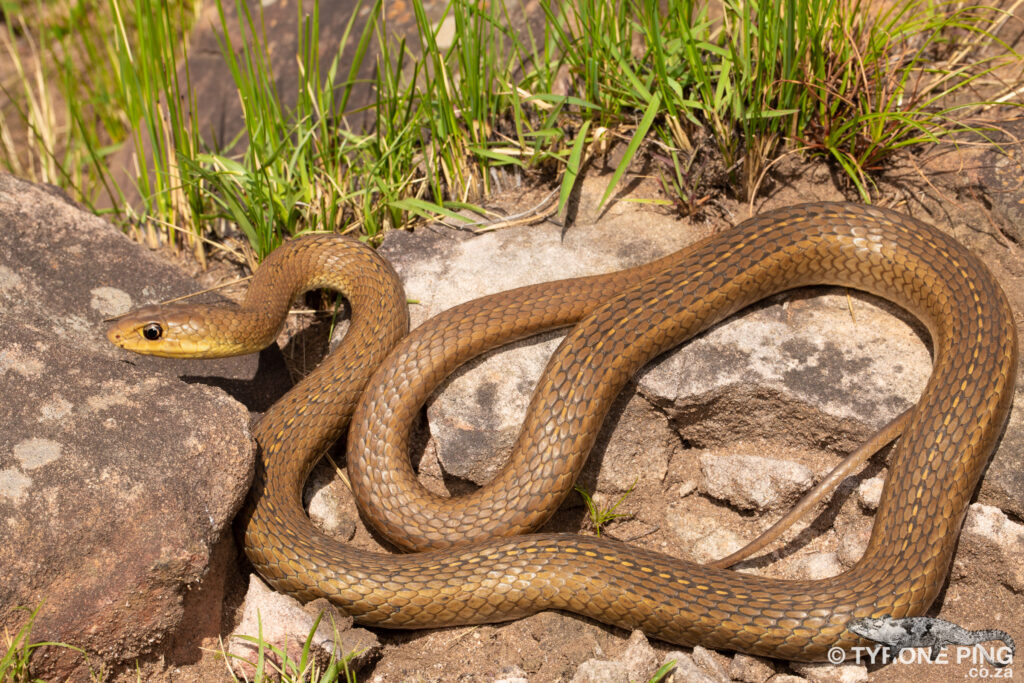
One of its most fascinating adaptations is its dramatic escape strategy. When captured by the tail, the snake is capable of spinning rapidly and snapping off a portion of its tail to wriggle free—a remarkable example of self-defense in the wild. While it may appear calm when undisturbed, this species will not hesitate to bite if handled.
Though it is venomous, the Short-snouted Grass Snake poses no threat to humans. Its venom is mild and primarily used to subdue small prey. Still, as with all wildlife, experts advise observing this snake from a safe distance and avoiding unnecessary contact.
This species is especially common in Gauteng and throughout the central regions of southern Africa. Its adaptability and elusive nature have helped it remain widespread despite increasing human encroachment on its habitat.
Wildlife enthusiasts are encouraged to appreciate the Short-snouted Grass Snake for what it is: a swift, resourceful survivor that plays a vital role in its ecosystem.